WordPress powers over 43% of all websites on the internet, and for good reason, it is flexible, extensible, and cheap to run. But here is the uncomfortable truth most WordPress tutorials skip: out of the box, WordPress is absolutely not SEO-optimized. A fresh WordPress install generates duplicate pages, thin empty archives, unfriendly URLs, zero structured data, sluggish page speeds, and no meaningful meta-tag management. Without tuning, a WordPress site is working against itself in Google’s ranking algorithm.
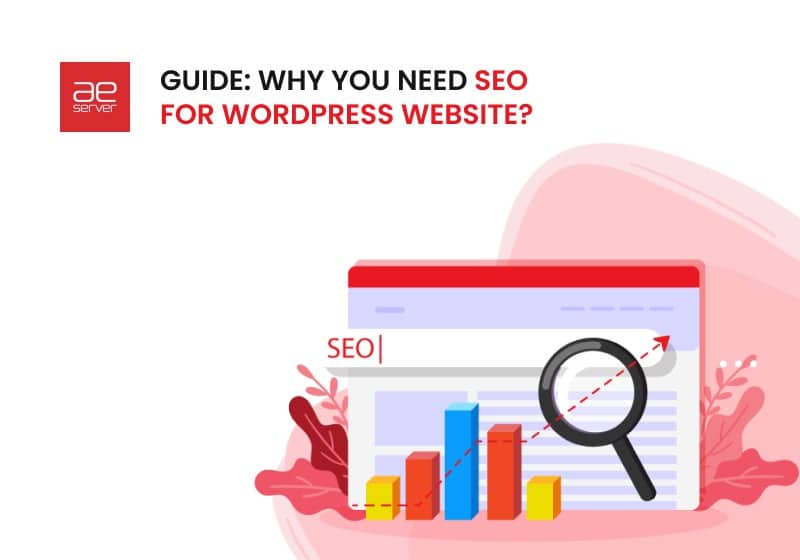
This guide is written for UAE businesses running WordPress, whether you are on shared hosting in Dubai, managing a WooCommerce store in Abu Dhabi, or running a bilingual Arabic-English brand site. It covers the ten default WordPress SEO problems, how to fix each one, which plugins to use, how to audit your site with the tools that real SEO professionals use, and how to tune for the specific realities of ranking on google.ae.
The 10 Default WordPress Problems That Hurt Your SEO
Before picking plugins or writing content, understand what a vanilla WordPress installation actually does wrong. Every item below is a default behaviour that Google either penalises, down-ranks, or struggles to parse correctly.
1. Non-Human URLs (Default Permalinks)
Straight after installation, WordPress generates URLs like yoursite.ae/?p=123. Google does read these, but they carry zero keyword signal and they look untrustworthy to users in search results. A URL like yoursite.ae/dubai-seo-agency/ communicates topic, earns clicks, and helps search engines understand the page before they even crawl the content.
Fix: In WordPress dashboard, go to Settings → Permalinks and select “Post name”. This single change takes 30 seconds and is probably the highest-ROI technical SEO action you can take on a new WordPress site.
2. Missing or Duplicated Meta Tags
WordPress out of the box does not let you write a unique <title> or meta description for each page. It just pulls the post title and leaves meta description blank. Across hundreds of pages, this produces identical or empty metadata, which is one of the most common issues flagged by Google Search Console.
Fix: Install an SEO plugin (Yoast, Rank Math, AIOSEO, or SEOPress, covered in the next section) and write a unique title tag and meta description for every indexable page. The plugin also takes over Open Graph tags, Twitter cards, and XML sitemaps.
3. Mass Duplicate and Thin Content Pages
This is the single biggest WordPress SEO killer, and most site owners do not know it exists. WordPress automatically creates multiple URLs pointing at overlapping content:
- Tag archives (
/tag/seo/,/tag/wordpress/) listing posts that share a tag - Category archives (
/category/marketing/) listing posts in a category - Date-based archives (
/2024/,/2024/03/) listing posts by month and year - Author archives (
/author/ahmed/) listing posts by each contributor - Attachment pages (one dedicated URL for every single image uploaded)
- Paginated archive pages (
/page/2/,/page/3/, etc.) - Empty or near-empty plugin-generated pages, for example when you install a services, courses, or portfolio plugin and it silently creates a taxonomy page for every item, often with just a title and nothing else
- Feed URLs (
/feed/for posts, comments, and more) - Calendar widgets that create date-based URLs pointing at empty listings
The result is a site where a single useful article might be accessible through 8 or more URLs, most of which are thin pages offering nothing Google wants to index. Googlebot wastes crawl budget on these junk pages, and legitimate pages get de-prioritised. Worse, identical excerpts on multiple archive pages register as duplicate content.
Fix: Use your SEO plugin to set noindex, follow on tag archives, author archives (if you only have one author), date archives, attachment pages, and empty taxonomies. Keep indexable only the pages that are genuinely useful to a searcher. Most SEO plugins also let you disable attachment pages entirely, redirecting them to the parent post, which is almost always the right choice.
4. No Structured Data (Schema Markup)
Schema markup tells Google what a page is, an article, a recipe, a product, a business, a FAQ, a how-to. Rich results (the star ratings, prices, FAQ dropdowns, breadcrumb trails you see in Google results) are driven entirely by schema. WordPress does not output any schema by default.
For a UAE business site, missing schema means:
- No LocalBusiness schema, so google.ae does not cleanly recognize your address, hours, or service area
- No Product schema for e-commerce, no price or availability in SERPs
- No Article schema, so author, publish date, and publisher are not signalled
- No FAQ schema, lost opportunity to capture expanded SERP real estate
- No BreadcrumbList, less trustworthy-looking listings
Fix: Rank Math and SEOPress include schema generators in their free versions. Yoast and AIOSEO offer schema in paid tiers. Start with Organization, LocalBusiness (for UAE businesses with a physical presence), Article, and FAQ where applicable. Validate output with Google’s Rich Results Test.
5. Slow Page Speed (No Caching, Heavy Assets)

WordPress is dynamic: every page is built on-demand by executing PHP and querying MySQL. Without caching, every visitor triggers a full rebuild. Combined with unoptimized images, render-blocking JavaScript, and bloated themes, the result is often 4 to 8 second load times on mobile. Google’s Core Web Vitals (LCP, INP, CLS) are a direct ranking factor, and slow sites lose positions.
Fix: Install a caching plugin (WP Rocket, LiteSpeed Cache, or W3 Total Cache), optimize images (ShortPixel, Smush, Imagify), enable lazy loading, use a CDN (Cloudflare), and ideally host on infrastructure close to your audience. For UAE audiences, a Dubai-based datacentre gives a measurable Core Web Vitals advantage over servers in Europe or North America, see our Managed WordPress Hosting in Dubai.
6. Incomplete XML Sitemap
WordPress 5.5+ includes a basic XML sitemap at /wp-sitemap.xml, but it is limited: it includes everything by default (including junk pages) and offers no segmentation, no priority control, no image sitemap, and no easy way to exclude content types.
Fix: Use your SEO plugin’s sitemap (Yoast, Rank Math, AIOSEO, SEOPress all generate better sitemaps than core WordPress), submit it to Google Search Console, and make sure it only includes pages you actually want indexed.
7. Weak Internal Linking
Internal links distribute PageRank within your site and signal topical relationships. Default WordPress does not create internal links automatically, writers have to add them manually, and most do not. The result is “orphan pages” (no internal links pointing to them) and “thin hubs” (important pages with only 1 or 2 inbound internal links).
Fix: Build a deliberate internal linking strategy. From every new post, link to 2 or 3 related existing posts. From every pillar page, link down to the supporting cluster articles. Rank Math Pro and AIOSEO offer Link Assistant tools that suggest internal links automatically based on content. For UAE sites targeting local keywords, always link to your UAE domain registrar and key service pages consistently.
8. No HTTPS by Default
HTTPS has been a Google ranking signal since 2014, and modern browsers flag any HTTP site as “Not Secure”. A WordPress site installed without an SSL certificate starts with a visible trust problem and a ranking penalty.
Fix: Install an SSL certificate. Free options via Let’s Encrypt are fine for most cases, but business sites collecting payments or personal data in the UAE should use a commercial certificate for the added warranty and validation. See our guide on how to install an SSL certificate and our SSL FAQ.
9. Unoptimized Images
Uploaded images in WordPress are not compressed, not converted to modern formats (WebP, AVIF), do not have auto-generated alt text, and are often loaded at full resolution even on mobile.
Fix: Install an image optimization plugin (ShortPixel, Smush, Imagify), enable WebP delivery, use lazy loading (native in WordPress 5.5+ but worth verifying), write meaningful alt text on every image (this also aids accessibility), and use properly sized images, not a 4000px-wide photo on a 600px space.
10. Broken 404 Handling and No Redirect Management
When a page does not exist, WordPress throws a default 404 page, often themed poorly, with no useful links back into the site. When you rename a post or change its URL, WordPress does not automatically create a redirect from the old URL. That means every URL change silently breaks inbound links and loses PageRank equity.
Fix: Two things. First, make sure your 404 page is useful (helpful copy, search box, links to popular posts, contact info). Second, install a redirects plugin or use Rank Math / AIOSEO’s built-in redirect manager so that every URL change is captured as a 301 redirect. Never delete a ranking page without redirecting it.
Best SEO Plugins for WordPress: Detailed Comparison
Four plugins genuinely compete for “best WordPress SEO plugin”. The right choice depends on your budget, how many sites you manage, and which features you actually need. All four handle the basics (titles, meta descriptions, sitemaps, Open Graph) competently; the differentiation is in schema depth, redirect management, multi-site pricing, and interface polish.
| Plugin | Free version | Paid starting price | Best for |
|---|---|---|---|
| Rank Math | Most generous free tier: unlimited keywords, schema, redirects, 404 monitor, GSC integration | From around $59/year (unlimited personal sites) | Most UAE SMEs, especially if budget-conscious, feature-rich free version covers 90% of needs |
| Yoast SEO | Basics + readability analysis, no redirects in free | From around $99/year per site | Content-heavy sites, beginners who value guided optimization, massive tutorial ecosystem |
| AIOSEO (All in One SEO) | Reasonable free tier, upgrade prompts visible | From around $49.50/year (1 site), $199.50/year (10 sites) | Agencies and freelancers managing multiple client sites, strong multi-site pricing |
| SEOPress | Clean interface, no upsell prompts, essentials included | From around $49/year (unlimited sites) | Multi-site owners, agencies wanting white-label, privacy-focused businesses |
Whichever you pick, never run two SEO plugins at the same time. They conflict, produce duplicate meta tags, and overwrite each other’s settings. If you are switching, all four plugins have built-in migration tools that import settings from competitors.
Speed Optimization: Caching Plugins Compared
Caching is the single biggest lever for WordPress speed, and by extension Core Web Vitals, and by extension Google rankings. The three serious contenders in the UAE market:
| Plugin | Pricing | Best for |
|---|---|---|
| WP Rocket | Premium only, from around $59/year for 1 site | Non-technical users, any hosting environment, best “set and forget” experience, consistent Core Web Vitals gains |
| LiteSpeed Cache | Free plugin, paid QUIC.cloud CDN tiers available | Sites on LiteSpeed servers (most modern UAE hosts), best free option, server-level caching is faster than file-based |
| W3 Total Cache | Free, paid pro tier | Advanced users who want granular control, complex multi-cache setups |
For most UAE WordPress users the decision is simple: if your host runs LiteSpeed (Hostinger, many regional providers), use LiteSpeed Cache for free. On Apache or Nginx hosts, pay for WP Rocket. Do not use multiple caching plugins at once, they conflict.
Beyond the caching plugin, a CDN (Cloudflare, QUIC.cloud, or equivalent) reduces latency further by serving static assets from edge points closer to visitors. Cloudflare’s free tier is sufficient for most small UAE sites.
Modern SEO Factors You Cannot Ignore
The WordPress basics above get your site to the starting line. The factors below decide whether you actually rank once the technical foundation is in place.
Core Web Vitals: LCP, INP, CLS
Google’s Core Web Vitals are three measurable performance metrics that directly influence ranking:
- LCP (Largest Contentful Paint), how fast the largest visible element loads. Target under 2.5 seconds.
- INP (Interaction to Next Paint), responsiveness to user input. Target under 200 milliseconds. This replaced FID in March 2024.
- CLS (Cumulative Layout Shift), visual stability. Target under 0.1.
Test your pages at Google PageSpeed Insights and track Core Web Vitals inside Google Search Console‘s dedicated report. Caching, image optimization, CDN, and hosting proximity are the levers.
E-E-A-T: Experience, Expertise, Authoritativeness, Trustworthiness
E-E-A-T is Google’s framework for evaluating content quality, especially for YMYL topics (Your Money, Your Life, things like health, finance, legal advice). For any UAE business operating in a regulated space (real estate, legal, medical, financial services), E-E-A-T signals are essential:
- Author bylines with credentials and photos on every article
- An “About” page with real company information, UAE address, trade licence details
- External citations to authoritative sources
- Reviews and testimonials with schema markup
- Up-to-date content (regularly refresh old posts)
Google’s Helpful Content and Spam Updates
Google’s Helpful Content Update (rolled out through 2022 to 2024 and now integrated into core ranking) explicitly targets thin, AI-generated, affiliate-padded, and low-value content. WordPress blogs that pumped out hundreds of low-effort posts to chase keywords have been hit hardest. The antidote is writing genuinely useful content that answers the searcher’s question completely, not padding for word count.
AI Overviews and Zero-Click Search
Google’s AI Overviews (previously SGE) surface synthesized answers at the top of many SERPs, often pulling from multiple sources. This is changing what “good SEO” means:
- Content needs to be structured in clear Q&A format for AI extraction
- Schema markup (especially FAQ, HowTo) increases the chance of being cited
- Being cited in AI Overviews matters even when it does not drive a direct click, it builds brand authority
- Topical depth beats shallow coverage, single authoritative articles outrank ten thin ones
Mobile-First Indexing
Google has indexed the web primarily from a mobile crawler since 2019. If your WordPress theme is not properly responsive, or critical content is hidden on mobile, you will not rank. Over 70% of UAE web traffic is mobile, so this is especially important regionally.
UAE-Specific WordPress SEO
Generic WordPress SEO advice is written for US or UK audiences. If you are targeting UAE customers, several specifics matter.
Host in Dubai for Speed Advantage
Latency from a European or US server to a UAE visitor adds 150 to 300 milliseconds on every request. Over a full page load with dozens of requests, that compounds into a measurable Core Web Vitals hit. Hosting in a Dubai datacentre, through AEserver’s Managed WordPress Hosting, Cloud VPS, or Dedicated Servers, removes that latency entirely for your UAE audience. Combined with a caching plugin and CDN, you get sub-second LCP for local visitors.
Use a .ae Domain for Local Trust
Google uses ccTLDs as a strong geotargeting signal. A .ae domain immediately tells google.ae that your site is UAE-focused, and it also signals local relevance to human visitors. For UAE-focused businesses, .ae should be the primary domain, with .com as a secondary defensive registration.
Bilingual Arabic + English with hreflang
The UAE audience is bilingual. Arabic-first content, properly localised (not machine-translated), regularly outperforms English-only versions for local searches. If you publish both versions, implement hreflang tags so Google serves the right language to each searcher. Most SEO plugins handle this in their paid tiers; Rank Math Pro and SEOPress Pro include hreflang management.
Google Business Profile (Formerly Google My Business)
For any UAE business with a physical presence, a verified Google Business Profile is essential. It drives the “map pack” results on google.ae and Google Maps, often the first thing a user sees on a local search. Claim your profile at google.com/business, add complete NAP (name, address, phone) matching your website exactly, upload photos, and actively request customer reviews. GBP is free and usually the highest-leverage local SEO action.
Target google.ae Specifically
Inside Google Search Console, set your international targeting to United Arab Emirates if your primary market is UAE. This does not limit who can find your site, but it helps google.ae understand your focus market.
Essential Audit Tools: Screaming Frog + Google Search Console

You cannot fix what you do not measure. Two tools are mandatory for any serious WordPress SEO workflow. Both are free at the level most UAE SMEs need.
Screaming Frog SEO Spider
Screaming Frog SEO Spider is a desktop application (Windows, macOS, Linux) that crawls your site the way Googlebot does and surfaces every technical SEO issue. The free version covers up to 500 URLs, which is enough for most small to medium UAE sites. The paid licence (around £199/year) removes the limit and adds Google Analytics, GSC, and PageSpeed integration.
What to look for in a Screaming Frog crawl:
- 4xx errors, broken internal links that need fixing or redirecting
- 5xx errors, server issues (possible hosting or plugin conflict)
- Redirect chains and loops, inefficient 301 patterns that waste crawl budget
- Duplicate or missing page titles, the most common WordPress issue
- Duplicate or missing meta descriptions
- Missing H1 tags or multiple H1s
- Images without alt text
- Canonical tag inconsistencies
- Unexpectedly indexed thin pages, tags, author archives, empty taxonomies
- Orphan pages, no internal links pointing to them
- Slow-responding URLs
Run a Screaming Frog crawl on any new WordPress site before launch, and then repeat monthly. The difference between a site that was “crawled” and one that just got launched is visible in the issues list.
Google Search Console: Crawl Stats Report
Google Search Console is free and non-negotiable. Within GSC, the Crawl Stats report (Settings → Crawling → Crawl stats) shows you exactly what Googlebot is doing on your site:
- Total crawl requests over time, a sudden spike or drop often signals a problem
- Average response time, rising numbers indicate host or performance issues
- Crawl requests by response code, how many 200s, 301s, 404s, 5xx errors Google is hitting
- Crawl requests by file type, HTML vs images vs JavaScript vs CSS
- Crawl requests by purpose, discovery (new URLs) vs refresh (re-crawling known URLs)
- Host status, general availability of your site to Google
If your Crawl Stats report shows Googlebot hitting hundreds of 404 pages, that is a problem. If it shows slow average response times, your hosting or caching needs work. If the ratio of discovery to refresh is skewed (way too many new URLs being discovered), you probably have duplicate content generation from tag or archive pages eating crawl budget.
GSC Page Indexing Report
The Page Indexing report (GSC documentation) shows which of your pages Google has indexed vs excluded. Compare the “Indexed” count against the number of actual valuable pages on your site. If Google is indexing significantly more pages than you have real content, you have index bloat (probably from WordPress auto-generated archives).
GSC Core Web Vitals and Performance Reports
The Core Web Vitals report shows which of your pages are failing LCP, INP, or CLS thresholds. The Performance report shows actual search queries, impressions, clicks, and average positions for every page. Together they tell you whether your SEO work is translating into visibility and traffic.
Check How Your 404 Page Actually Behaves
Broken URL handling is one of the sneakiest WordPress SEO issues. Here is the check, which takes 2 minutes and catches a surprising number of problems:
- Type a deliberately-broken URL into your browser, for example
yoursite.ae/this-does-not-exist-abc123/. The page should load quickly, display a helpful 404 page with navigation and a search box, and return HTTP status code 404 (not 200). - Verify the status code. Use browser DevTools (Network tab) or a tool like httpstatus.io. Some themes or plugins misconfigure 404 pages to return 200 (“soft 404”), which tricks Google into indexing non-existent pages and wastes crawl budget.
- Check the 404 page is actually useful. A blank “Not Found” page with no links or search bar is a missed opportunity. A good 404 page includes recent posts, a prominent search field, contact info, and a friendly tone that keeps the user on the site.
- Monitor 404s in GSC and Screaming Frog. GSC’s Page Indexing report flags “Not found (404)”. Screaming Frog’s Response Codes report lists every 404 the crawler hits. For each 404, decide: fix the broken link, or 301-redirect to the most relevant live page.
The WordPress SEO Setup Checklist
A practical order of operations for a new WordPress site or one being rescued:
- Settings → Permalinks → Post name. 30 seconds, fixes non-human URLs.
- Install an SSL certificate and force HTTPS on all pages.
- Install an SEO plugin (Rank Math free is the default recommendation) and complete its setup wizard.
- Set noindex on tag archives, date archives, author archives (if one author), and attachment pages.
- Disable attachment pages entirely, redirect them to their parent post.
- Write unique title tag and meta description for every indexable page.
- Enable schema markup, at minimum Organization and Article.
- Add LocalBusiness schema if you have a physical UAE presence.
- Install a caching plugin (LiteSpeed Cache or WP Rocket).
- Install an image optimization plugin, enable WebP delivery, enable lazy loading.
- Connect Cloudflare or another CDN with UAE edge coverage.
- Set up Google Search Console and submit your XML sitemap.
- Set up Google Analytics 4 for traffic data.
- Set up a Google Business Profile if you have a physical UAE presence.
- Run a Screaming Frog crawl, fix every issue flagged in the “Overview” priority tab.
- Review GSC Crawl Stats weekly for the first month, then monthly.
- Test 404 behaviour, confirm correct status code and useful page.
- Set up a redirect manager and log every URL change as a 301.
- Build internal linking habits, every new post links to 2 to 3 existing related posts.
- Plan content around search intent, not just keywords, aim for topical authority not keyword volume.
Common WordPress SEO Mistakes to Avoid
- Running two SEO plugins simultaneously. They conflict. Pick one.
- Installing 50+ plugins. Each plugin adds JS, CSS, DB queries, and potential security issues. Audit and remove unused plugins quarterly.
- Using a “fast” theme that actually is not. Page builders like Elementor and Divi add significant overhead. GeneratePress, Astra, Kadence, and Blocksy are lightweight alternatives.
- Copying manufacturer product descriptions on e-commerce sites. Immediate duplicate content problem with every other seller of the same product. Rewrite every product description.
- Changing a URL without 301 redirect. Every URL change without a redirect breaks inbound links and loses PageRank equity.
- Blocking CSS/JS in robots.txt. Google needs to render the page the way users see it; blocking resources causes ranking issues.
- Ignoring mobile rendering. If the theme is not truly responsive, no SEO plugin can save it.
- Letting tags run wild. Every tag creates an archive page. 500 tags = 500 thin pages. Consolidate to 20 to 50 meaningful tags, or disable tag archives entirely.
- Skipping alt text on images. Accessibility issue, SEO issue, missed opportunity for image search traffic.
- Not tracking outcomes. SEO without GSC and GA4 is guesswork. Measure, iterate, repeat.
UAE WordPress SEO FAQ
Do I need a .ae domain to rank on google.ae?
Not strictly required, a properly configured .com site with UAE targeting in GSC can rank fine. But a .ae domain gives an immediate geotargeting signal and local trust benefit, and it often converts better for UAE visitors who see .ae as “a local brand”.
Does hosting location actually affect SEO in the UAE?
Indirectly but meaningfully. Hosting far from your audience adds latency, latency hurts Core Web Vitals, and Core Web Vitals are a ranking factor. For a UAE-focused site, Dubai hosting typically gives 150 to 300 ms faster responses to UAE visitors than European or US hosting, which is enough to flip a page from “needs improvement” to “good” in Core Web Vitals.
How long does WordPress SEO take to show results?
Technical fixes (permalinks, meta tags, caching, schema) often show measurable improvements in 4 to 8 weeks as Google re-crawls and re-indexes. Content-driven ranking for competitive keywords typically takes 4 to 9 months of consistent publishing and link building. Brand new sites have less initial authority, so patience matters.
Which SEO plugin is best for a bilingual Arabic and English WordPress site?
For bilingual UAE sites, Rank Math Pro or SEOPress Pro are the stronger choices because they include hreflang management and better multi-language schema. Pair with WPML or Polylang for the actual translation layer.
Is Yoast still worth it?
Yoast remains a solid plugin, especially for beginners who value its readability analysis and the massive tutorial ecosystem. But Rank Math offers more features for free and is noticeably lighter in terms of resource footprint. For most new UAE WordPress sites, Rank Math is the higher-leverage starting point.
Do I need a paid caching plugin?
If your host runs LiteSpeed, no: LiteSpeed Cache (free) is genuinely excellent and often beats paid alternatives on that stack. On Apache or Nginx hosts, WP Rocket’s paid version is usually worth the $59/year for most non-technical users because it works out of the box.
How do I check if my WordPress site is creating duplicate pages?
Three ways. (1) GSC’s Page Indexing report shows indexed vs excluded pages, a much higher indexed count than real content = bloat. (2) Run a Screaming Frog crawl and look at the “Duplicate” filters on Page Titles and Meta Descriptions. (3) Google search site:yoursite.ae and scroll through the results, anything that looks like a tag page, date archive, or attachment URL is a red flag.
Should I worry about Google’s AI Overviews replacing my traffic?
Yes, but the response is not defeatist. AI Overviews reduce clicks on some informational queries but often cite underlying sources. The winners are sites that (a) have strong E-E-A-T signals, (b) provide structured answers (schema, FAQs, clear headings), and (c) cover topics with genuine depth. Thin SEO-padded content loses; expert in-depth content gets cited and builds brand authority even without clicks.
AEserver’s Verdict
WordPress is a fantastic platform, but it is not SEO-optimized out of the box and never has been. The default configuration generates duplicate archives, uses non-human URLs, has no schema, no caching, no useful 404 handling, and no meta tag control. Every WordPress SEO success story starts with the same unglamorous work: fixing the defaults.
For UAE businesses, the wins compound. A .ae domain plus UAE-hosted infrastructure plus a properly tuned WordPress stack plus Arabic-English bilingual content with hreflang will outrank generic overseas-hosted competitors on google.ae almost every time. That is a real opportunity most UAE websites leave on the table.
The practical starting point for any UAE WordPress site:
- Move to fast local hosting. AEserver’s Managed WordPress Hosting in Dubai handles updates, caching, and security at the server level, with sub-second response times for UAE audiences. For higher-traffic sites, Cloud VPS or Dedicated Servers in the same Dubai datacentre.
- Secure with SSL. AEserver SSL Certificates and our installation guide.
- Register the right domains. A .ae domain for UAE authority, plus defensive .com and .ai if relevant to your brand.
- Install Rank Math (free), LiteSpeed Cache or WP Rocket, ShortPixel, and Cloudflare. That stack covers 80% of the technical SEO foundation.
- Audit monthly with Screaming Frog and Google Search Console. Fix what they flag, measure what moves.
For a broader startup context, see our guide to starting an online business in Dubai, which covers the full stack of domain, hosting, email, and marketing setup. For measuring your site’s authority progress over time, our guide to checking domain authority walks through the main metrics SEO professionals use.
More in WordPress